
On the night of 18 September 2026, Luxembourg Airport stopped flights after reports of drones. Officials later said many of the follow-up reports appeared to be the navigation lights of crewed aircraft. Ukraine faces the same detection problem at a far larger scale: in one night before 11 November its air force reported 163 drones launched at the country and 130 intercepted or suppressed, according to ABC News. Four counter-drone lessons from Ukraine apply directly to airports, energy sites and ports in Europe: layer the sensors, do not depend on the drone’s radio, classify before raising an alarm, and keep working through power and network loss.
Ukraine’s drone picture in November 2026
Large drone raids at night are routine in Ukraine. Air force reports count drones in the dozens or hundreds, and the same airspace carries Ukraine’s own uncrewed aircraft.
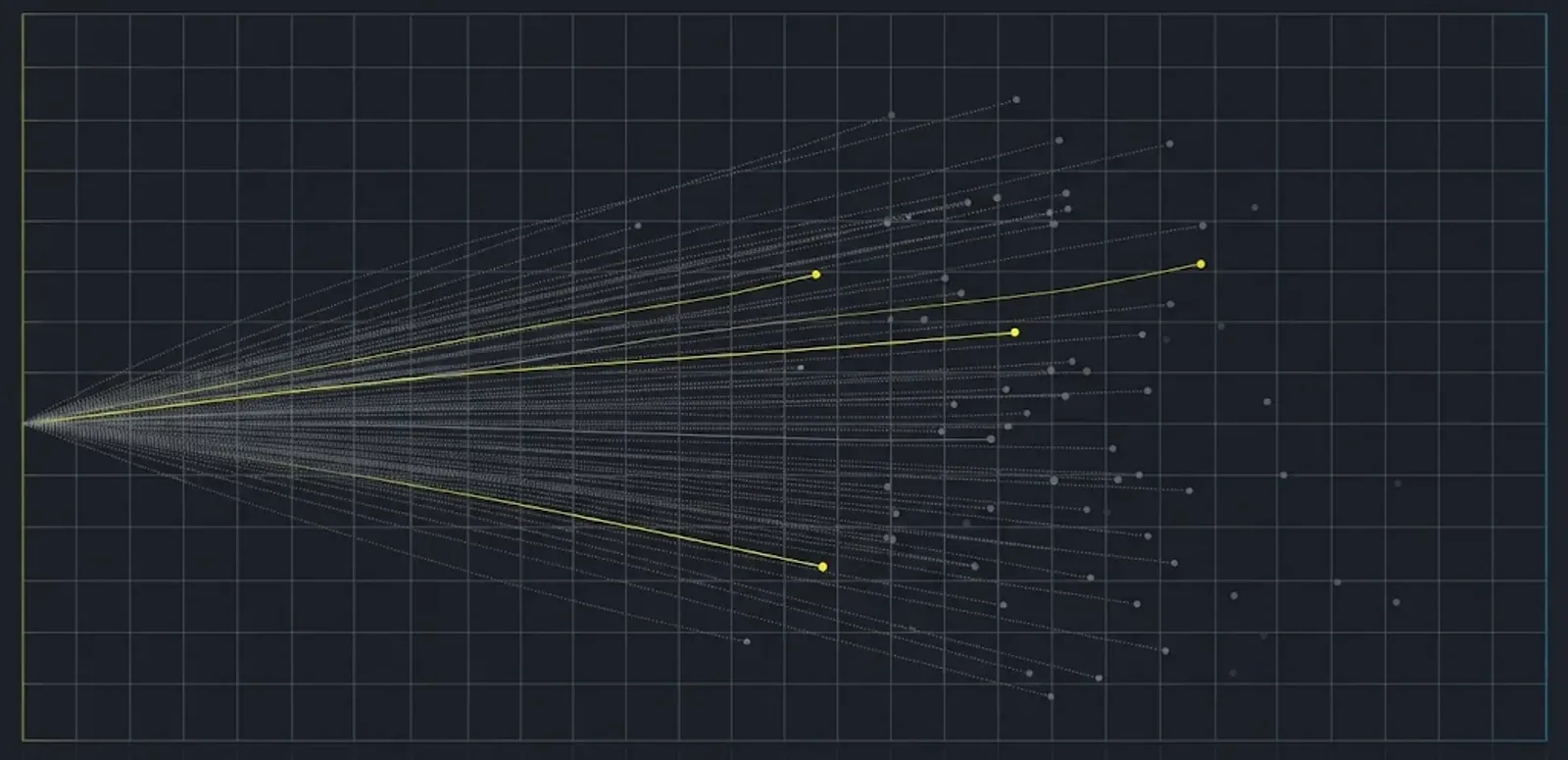
Four features of that picture matter for anyone protecting a site:
- Volume. Detection and classification have to handle hundreds of objects a night, every night. A system that needs an operator to look at each alarm does not scale.
- Radio silence and jamming. Many drones fly pre-programmed routes and may not transmit at all, and satellite navigation is jammed across large areas.
- Faster drones. Of the 163 drones in that one night, 91 were jet-powered. A jet-powered drone is a drone driven by a small jet engine instead of propellers. It covers the distance from first detection to a site in a fraction of the time, so sensor latency and manual steps matter more.
- Power cuts and broken links. Sensors and control rooms keep working through outages of mains power and communications.
Each of these maps to one of the lessons below.
Why Europe is paying attention
In 2026 drone sightings closed European airports for periods from minutes to hours. At Munich on 30 May, flights stopped for about an hour after two pilots reported a possible drone, and emergency services found no threat. In Luxembourg in September, the closure was followed by reports that officials linked to aircraft lights. When the only sensor is a person looking at the sky, nobody can tell quickly what is up there, and the safe decision is to stop traffic.
Brussels has responded on two fronts. In February 2026 the European Commission published its Action Plan on Drone and Counter Drone Security. On 17 July it launched the EU–Ukraine Drone Alliance in Kyiv, with 18 founding companies, nine from EU countries and nine from Ukraine. Its stated aim is joint ventures that speed up drone and counter-drone technology and production.
Four counter-drone lessons for critical sites
An airport, a substation or a port works under different rules from Ukraine. The engineering lessons still carry over.
1. Layer the sensors and spread them out
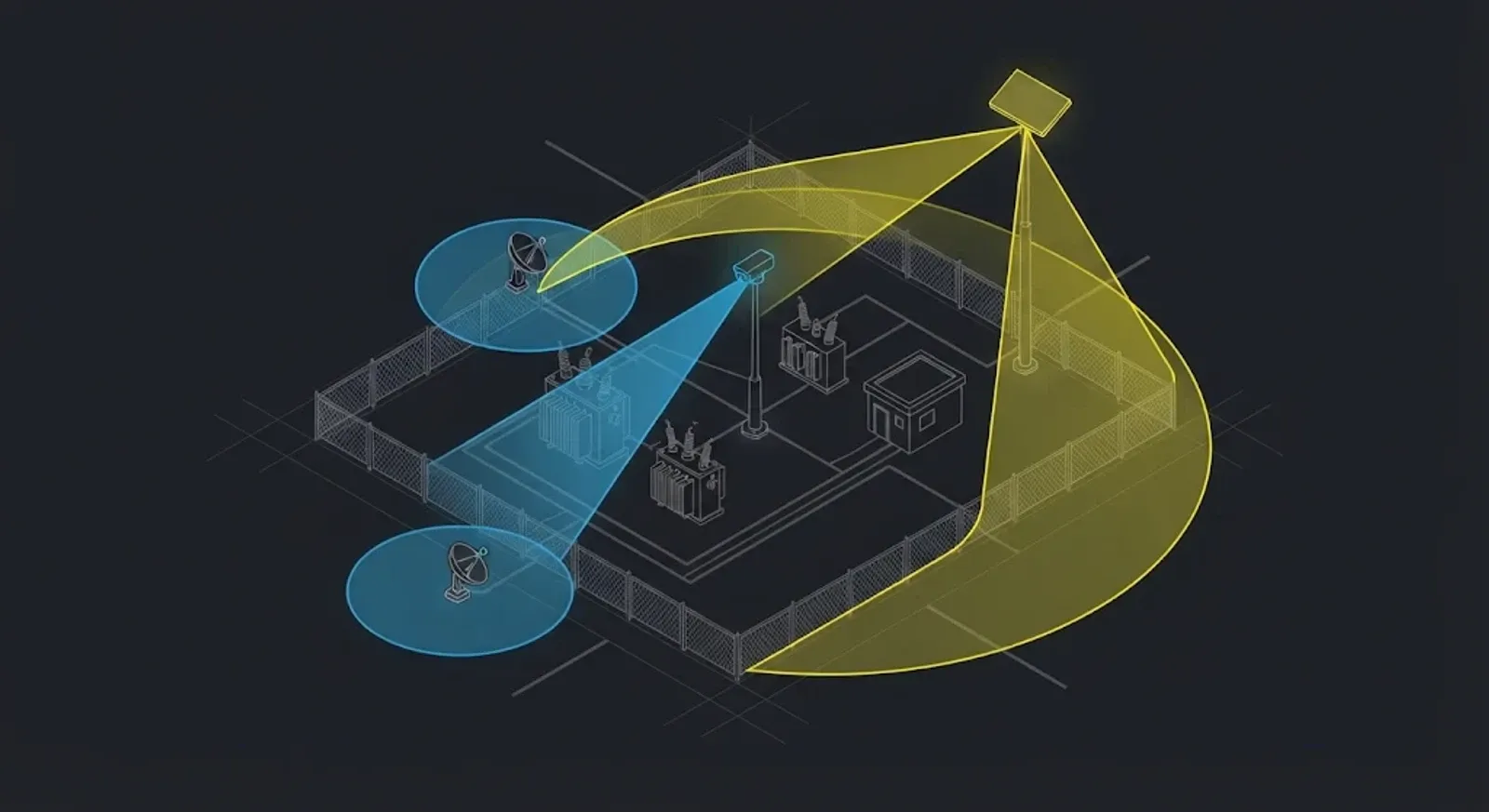
This answers volume and speed. Radar measures range and movement in any weather and gives the early warning that faster drones demand. Cameras with on-board AI confirm what the object is and record evidence. Acoustic nodes hear engines and propellers and are cheap enough to cover a perimeter densely. Ours hear combustion-engine drones at up to 3 km and electric drones at up to 200 m, and report a detection about 12 seconds after the sound arrives. That makes them a gap-filler for low and radio-silent drones. Early range for fast drones comes from radar.
2. Do not depend on the drone’s radio
RF detection listens for a drone’s control and video links. A drone flying a pre-set route with its radio off is invisible to it, and so is a fibre-optic drone flown through a glass fibre. Passive sensors, acoustic and visual, close that gap because they detect the aircraft itself.
3. Classify before you raise the alarm

Sensor fusion combines radar, acoustic and camera detections of the same object into one track with one classification. It turns “someone saw a light” into, for example, “a small drone, about a kilometre out, heading north”, or “a bird, no action needed”. With a fused track, the security team decides on evidence from several sensors.
4. Keep working when power and networks fail
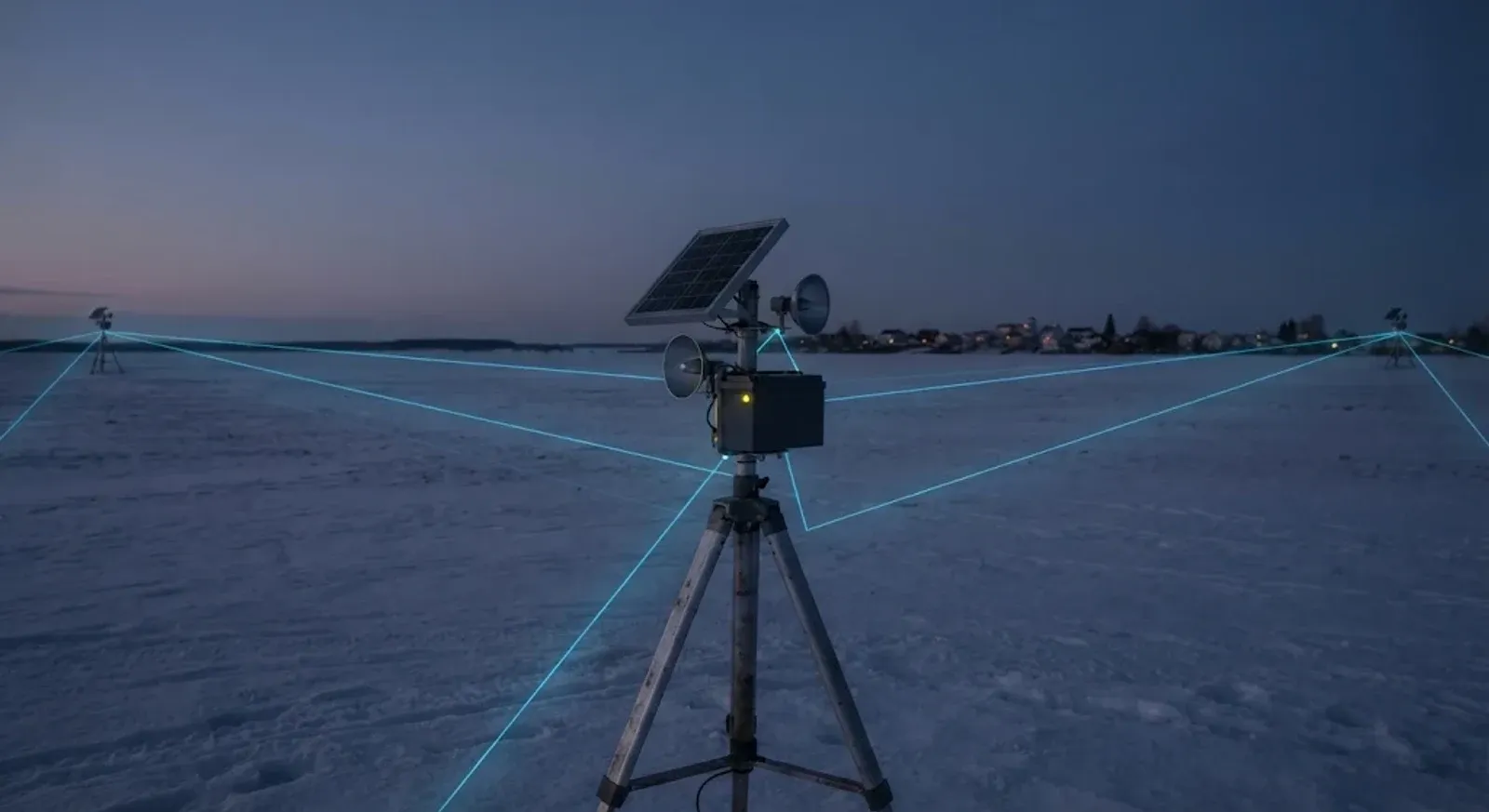
A detection grid that stops when the mains or the fibre fails leaves the site blind at the worst moment. Our acoustic nodes can run on a 200 W solar panel and battery, need as little as 32 kbit/s of bandwidth, and share structured detections over a mesh network. This is how we test our own systems in Ukraine, under power cuts, network loss and jamming.
How Perfsol can help
Operators of energy sites, plants, ports and other critical sites. Our counter-drone solution combines acoustic, visual and radar detection, fuses them into one track with one alert, and connects to your security team’s existing tools. RF mitigation is a regulated activity. We supply it only to operators authorised to use it under their country’s radio, aviation and export-control rules.
Companies building drones, including new European–Ukrainian joint ventures. Drone Platform keeps a drone’s flight controller, companion computer, AI models and configuration in one project, and the next prototype starts from components already configured. A companion computer is the on-board computer that runs perception and AI next to the flight controller. Today the platform has been verified on hardware with Betaflight and ArduCopter flight controllers and Raspberry Pi 5 and NVIDIA Jetson Orin Nano companions. Fleet operations, live video and an SDK are on the roadmap. The usual first step is to discuss an engineering pilot on your own hardware.
We build mission-critical systems from scratch and on top of what clients already run, and support them for years.
What to do this week
If you run a critical site, take your last drone sighting and write down the time, the direction, who reported it, and which of your sensors registered it. If the answer is “none”, that gap is where to start. We can help with a site assessment that maps what flies near you, what your sensors can tell apart and where the blind spots are.
If you build drones and are entering a European–Ukrainian partnership, book integration and test time into the plan from the first month. In our experience that is where schedules slip.
Questions we are asked
What is the EU–Ukraine Drone Alliance?
A European Commission initiative launched in Kyiv on 17 July 2026, during the third EU–Ukraine Defence Industry Forum. It brings together companies, start-ups, researchers and users from EU countries and Ukraine to build joint ventures and speed up drone and counter-drone technology and production. It started with 18 founding companies, nine from the EU and nine from Ukraine.
Why do airports close over drone sightings that are never confirmed?
Because a pilot's or a bystander's report is often the only sensor. Without radar, acoustic and camera data fused into one track, nobody can say quickly whether the object is a drone, a bird or the light of an aircraft, and the safe choice is to stop traffic.
Can a European drone company build on Ukrainian know-how?
Yes, if the integration work is planned from the start. Most of the effort goes into making flight controllers, companion computers, sensors and software work together and meet local certification and security rules.
Sources
- Russia-Ukraine talks end without breakthrough announcement amid barrage of drones (11 November 2026), ABC News
- Commission launches EU-Ukraine Drone Alliance to boost drone and counter-drone technology (17 July 2026), European Commission
- Drone and counter-drone security, European Commission
- Flights temporarily suspended at Munich Airport after reported drone sighting (30 May 2026), Euronews
- Drone sightings close Luxembourg Airport (21 September 2026), DroneLife
- Airport drone closures raise a bigger question: what do authorities actually know? (2 June 2026), DroneLife